
The Cedi-to-Yuan Direct Payment System: Unlocking Trade, De-Dollarization, and Growth for Ghana-China Commerce
A landmark policy shift is eliminating U.S. dollar double conversion between Ghana and China. Here is how direct Cedi-to-Yuan settlement via CIPS works, participating banks like Stanbic and GCB, and the immense opportunities unlocked for local SMEs, diaspora investors, and national FX stability.

Isaac Agya Koomson
Chief Executive Officer, KIA–Start Up Consult Ltd
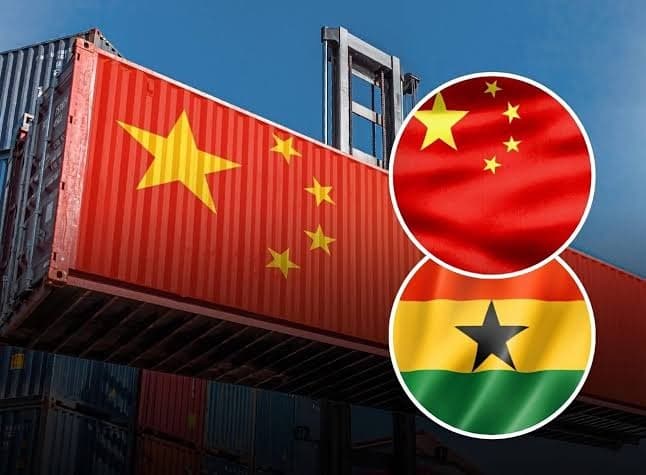
Direct Ghana Cedi to Chinese Yuan clearing: containerized trade and bilateral financial corridors powered by CIPS.
The introduction of a direct Cedi-to-Yuan payment framework marks one of the most consequential monetary and trade policy shifts in Ghana's modern economic history. For decades, bilateral commerce between Ghana and the People's Republic of China—Ghana's single largest source of imports and industrial inputs—has been heavily constrained by an artificial intermediary: the United States dollar. By creating a direct, institutional currency bridge powered by China's Cross-Border Interbank Payment System (CIPS), Ghanaian monetary authorities and pioneering commercial banks are dismantling decades of structural transaction friction, shielding the national currency, and opening a new frontier of economic opportunities for local enterprises, the diaspora, and international investors.
1. The Mechanics: How the Cedi-to-Yuan System Works
To appreciate the scale of this breakthrough, one must first understand the structural inefficiencies of the traditional settlement model. Historically, a Ghanaian trader purchasing machinery, textiles, electronics, or construction hardware from manufacturers in Yiwu, Guangzhou, or Shenzhen had to execute a clumsy 'double conversion' cycle. The importer first converted Ghana Cedis (GHS) into U.S. Dollars (USD) at a local commercial bank, absorbing a first round of foreign exchange spreads and banking commissions.
Those dollars were then wired across the Atlantic to a correspondent bank in New York or London, which levied wire transit fees before routing the capital to China. Upon arrival, the Chinese receiving bank executed a second conversion, transforming USD into Chinese Yuan (Renminbi / CNY) before crediting the supplier. This three-legged journey not only took anywhere between 3 to 7 business days to settle, but also leaked an estimated 3% to 7% of every invoice value in double-margin FX spreads, correspondent handling fees, and settlement volatility.
Under the new direct settlement architecture, this entire intermediary chain is eliminated. A registered Ghanaian importer can now fund transactions directly in Ghana Cedis from their local bank account. The participating Ghanaian institution quotes a direct GHS/CNY exchange rate and remits Chinese Yuan directly into the vendor's onshore account in China. There is no U.S. dollar intermediary, no correspondent routing through Western financial centers, and zero exposure to dollar availability bottlenecks.
“Cutting out the U.S. dollar intermediary turns a multi-day, three-legged currency gamble into a direct, predictable sovereign trade corridor.”
Powered by CIPS: The Financial Superhighway Behind the Corridor
This frictionless settlement pipeline is made possible by connecting Ghanaian banks directly to China's Cross-Border Interbank Payment System (CIPS). Established by the People's Bank of China (PBoC) to internationalize the Renminbi, CIPS operates as a dedicated messaging and gross settlement clearing house for cross-border CNY transactions.
Instead of relying exclusively on Western-dominated SWIFT routing protocols that pass through American jurisdictions, CIPS provides an independent, low-latency financial corridor. Participating Ghanaian banks interface directly with Chinese clearing houses, ensuring end-to-end transparency, real-time message tracking, and sovereign payment security that remains immune to third-party geopolitical bottlenecks.
2. Participating Banks: Pioneers and Expansion Across Ghana
The operational rollout of the Cedi-to-Yuan payment corridor is anchored by two of Ghana's premier financial institutions, each playing a distinctive strategic role in driving adoption:
Stanbic Bank Ghana (The Operational Pioneer): Stanbic Bank is currently spearheading the live commercial pilot of the direct settlement system for both corporate enterprises and commercial traders. Backed by its parent Standard Bank Group—which maintains a long-standing strategic alliance with the Industrial and Commercial Bank of China (ICBC), the largest bank in the world by assets—Stanbic has operationalized dedicated China desks and digital execution channels. Impressively, Stanbic's corporate digital banking platform processes direct Yuan payment instructions submitted before 2:00 PM GMT for next-business-day (T+1) settlement in China, slashing traditional waiting times by more than 70%.
Ghana Commercial Bank / GCB Bank (Domestic Democratization): As Ghana's largest indigenous bank with over 185 branches across all 16 administrative regions, GCB Bank is developing a parallel direct Yuan facility. GCB's active entry into this corridor is essential for systemic democratization: while international banks cater predominantly to tier-1 corporates, GCB's sprawling retail and SME branch network ensures that grassroots importers, regional agricultural distributors, market women associations, and municipal contractors across Kumasi, Takoradi, Tamale, and Sunyani can access the exact same direct clearing benefits.
Regulatory Coordination: Under the supervision of the Bank of Ghana (BoG), this banking infrastructure is laying the groundwork for a broader domestic bilateral currency clearing regime, positioning Ghana as one of the most forward-thinking trade finance hubs on the African continent.
3. Direct Commercial Benefits: Lower Costs, Rapid Turnaround, and FX Relief
The commercial dividends of this monetary realignment are immediate and tangible across several key operational dimensions:
Substantial Cost Reductions: By cutting out U.S. correspondent banks and double currency spreads, Ghanaian businesses eliminate hidden intermediary charges and retail dollar markups. For high-volume importers operating on slim 8% to 12% margins, saving 3% to 5% on currency friction directly translates into enhanced profitability or more competitive retail pricing on the Ghanaian market.
Rapid Liquidity Turnaround: Time is capital in cross-border trade. With next-business-day settlement on compliant digital platforms, Chinese manufacturers receive confirmed funds within 24 hours. This eliminates the dreaded 5-to-7 day factory production holds where Chinese suppliers wait for USD wires to clear before releasing goods to shipping lines.
Relief on Bank of Ghana Dollar Reserves: Ghana imports billions of dollars in manufactured goods from China annually. In the past, every single container imported added intense buying pressure on the local foreign exchange market, driving commercial banks to bid aggressively for scarce U.S. dollars. Diverting China-bound transactions into direct Yuan clearing relieves substantial artificial demand pressure from the Bank of Ghana’s central foreign exchange reserves, helping to dampen imported inflation and anchor Cedi stability.
Beyond Commercial Trade (Education, Healthcare, and Remittances): Crucially, this corridor is not reserved exclusively for industrial conglomerates. Ghanaian families can utilize the facility to pay university tuition and accommodation fees directly in Yuan for the thousands of Ghanaian students currently enrolled in Chinese academic institutions. It equally accommodates payments for medical treatments, specialist engineering consultations, and personal remittances without losing chunks of money to Western wire intermediaries.
“When local traders no longer compete for U.S. dollars to pay Asian suppliers, national currency volatility cools down and consumer shelf prices stabilize.”
4. Strategic Value for Ghanaian Local Enterprises and SMEs
For local micro, small, and medium-sized enterprises (MSMEs)—which represent over 85% of private sector employment in Ghana—the Cedi-to-Yuan direct payment system is an operational game-changer.
Importers based in commercial clusters such as Makola, Opera Square, Abossey Okai, and Kumasi Adum frequently suffer from the notorious 'dollar allocation queues' at local commercial banks, especially during peak restocking seasons (August through November). When local banks run low on physical dollar liquidity, small traders are forced into parallel black-market forex bureaus, paying astronomical premiums that eat away their working capital.
With direct Cedi-to-Yuan accounts, traders bypass dollar rationing entirely. Furthermore, paying Chinese suppliers in their domestic currency (CNY) gives Ghanaian traders substantial bargaining power. Chinese factories prefer receiving domestic Yuan because it spares them the accounting complexity and foreign exchange tax liabilities of managing incoming USD. Consequently, Ghanaian buyers can negotiate superior factory-gate discounts, prioritize shipment slots, and establish formal trade credit arrangements.
5. The Diaspora Connection: Streamlining Investment and Cross-Border Capital
The Ghanaian diaspora remits over $4.5 billion annually, a substantial portion of which is channeled into real estate construction, commercial retail, logistics fleets, and agro-processing ventures. Historically, diasporans seeking to finance projects in Ghana faced convoluted cross-border friction when purchasing materials or capital equipment from China.
A diaspora investor living in the United Kingdom, North America, or Europe can now coordinate with their local Ghanaian business entities or family enterprises to procure commercial solar installations, processing machinery, factory equipment, and architectural finishes directly from China using Cedi-funded accounts in Accra. Rather than losing capital through multi-tiered international transfer fees, the diaspora can fund local Ghanaian banking vehicles that seamlessly disburse payments in Yuan directly to Chinese manufacturers.
Similarly, diaspora families sponsoring children or relatives studying in Chinese higher education institutions now enjoy a transparent, traceable, and direct payment channel that eliminates speculative forex markups and ensures tuition payments arrive promptly before semester deadlines.
6. Catalyst for Foreign Direct Investment (FDI) & Industrialization (1D1F)
From an industrial policy perspective, the Cedi-to-Yuan channel aligns squarely with Ghana's domestic value-addition and manufacturing goals, such as the One District One Factory (1D1F) initiative and Ghana Investment Promotion Centre (GIPC) priorities.
Establishment of Industrial Plants: Setting up modern agro-processing facilities, pharmaceutical manufacturing, or plastic recycling plants requires importing specialized capital goods—90% of which originate from Chinese industrial hubs. Direct settlement enables Ghanaian and foreign joint-venture promoters to procure heavy machinery and replacement components with predictable budgeting and zero exposure to dollar exchange spikes.
Attracting Chinese Foreign Direct Investment: Chinese industrial investors and Engineering, Procurement, and Construction (EPC) contractors evaluating West Africa view currency convertibility as a primary risk factor. A direct Cedi-Yuan bilateral corridor reassures investors that operational supply chains, equipment imports, and corporate debt servicing can flow smoothly through an established, regulated bilateral infrastructure.
7. The Macroeconomic Synthesis: De-Dollarization & AfCFTA Regional Leadership
Globally, the world economy is transitioning toward a multipolar monetary architecture. The expansion of bilateral local-currency settlement agreements across Asia, Latin America, and the Middle East reflects a shared imperative to diminish vulnerabilities tied to dollar hegemony, global interest rate shocks, and correspondent bank de-risking.
In West Africa, Ghana is positioning itself at the leading edge of this monetary evolution through a complementary dual-corridor strategy:
Within Africa: Ghana leverages the Pan-African Payment and Settlement System (PAPSS)—headquartered right in Accra under AfCFTA—allowing Ghanaian exporters and importers to trade across the African continent in local African currencies without touching the dollar.
Across Asia: Ghana activates CIPS and direct Cedi-to-Yuan settlement for its primary manufacturing and supply-chain corridor with China.
Together, PAPSS and CIPS forge an integrated, de-dollarized economic shield. This twin architecture lowers systemic import inflation, shields Ghana's Gross International Reserves (GIR), and solidifies the nation's reputation as the undisputed trade and logistics capital of West Africa.
“Ghana's future economic resilience rests on a twin-pillar architecture: trading within Africa via PAPSS, and trading with Asia directly via CIPS.”
8. Practical Guidance: How Ghanaian Businesses Can Leverage the Corridor Today
For Ghanaian business owners, finance directors, and procurement managers eager to capitalize on this framework, KIA–Start Up Consult recommends the following actionable implementation steps:
Step 1 - Audit Supplier Invoicing in China: Initiate proactive discussions with your Chinese suppliers to request commercial pro-forma invoices denominated directly in Chinese Yuan (CNY / RMB) rather than USD. Request their domestic Chinese bank account details (including their bank's CIPS routing code or CNAPS number). Compare the CNY quotation against their USD price; in most cases, factories offer a 2% to 4% discount when paid in domestic currency.
Step 2 - Activate Direct Settlement Facility with Partner Banks: Approach the China Desk at Stanbic Bank Ghana or the Corporate/SME Banking Division at GCB Bank. Inquire about the requirements for direct Cedi-to-Yuan trade financing, ensuring your business registration, GRA tax compliance, and import documentation (such as Ghana Integrated Financial Management Information System / ICUMS clearance) are fully verified.
Step 3 - Leverage Digital Platforms for Next-Day Settlement: Ensure your corporate digital banking profile is configured for international electronic payments. Schedule time-sensitive transfers prior to the 2:00 PM GMT cut-off window to guarantee T+1 next-business-day execution in China.
Step 4 - Institutional Advisory: If your business requires formal restructuring, import compliance audits, or capital advisory to integrate direct cross-border trade finance into your balance sheet, consult with the strategic team at KIA–Start Up Consult Ltd.
- Eliminates double currency conversion (GHS to USD, then USD to CNY), saving Ghanaian importers between 3% and 7% on total transaction costs.
- Transactions route through China's Cross-Border Interbank Payment System (CIPS), providing an independent, sovereign financial superhighway.
- Stanbic Bank Ghana is actively piloting the service with next-business-day (T+1) settlement for requests submitted before 2:00 PM GMT.
- GCB Bank is developing a parallel framework, ensuring nationwide access across retail, SME, and regional trade networks.
- Significantly eases artificial U.S. dollar demand on the Bank of Ghana's foreign exchange reserves, reinforcing Cedi stability.
- Applies beyond commercial cargo to university tuition payments for Ghanaian students in China, medical expenses, and family remittances.
- Complements the Pan-African Payment and Settlement System (PAPSS) to form an integrated, de-dollarized trade finance architecture for Ghana.
People Also Ask
Q1.What is the Cedi-to-Yuan direct payment system in Ghana?
It is a specialized bilateral payment mechanism that allows Ghanaian businesses and individuals to pay suppliers, institutions, or family members in China using Ghana Cedis directly converted into Chinese Yuan (CNY). It bypasses the traditional requirement of purchasing U.S. dollars and routing funds through American or European correspondent banks.
Q2.How does the system eliminate the double conversion problem?
In the past, an importer had to convert Ghana Cedis to U.S. Dollars locally, wire those dollars to an international intermediary bank, and then have the Chinese bank convert those dollars into Yuan. Under the new direct system, a single conversion occurs directly between Ghana Cedis and Chinese Yuan at a competitive bilateral rate, eliminating two layers of foreign exchange spreads and correspondent fees.
Q3.What is CIPS and what role does it play in Ghana-China trade?
CIPS (Cross-Border Interbank Payment System) is China's international settlement and messaging infrastructure for cross-border Renminbi (Yuan) transactions. By connecting directly to CIPS, participating Ghanaian banks can route payments straight to Chinese banks without relying exclusively on Western clearing systems, resulting in faster clearing times and enhanced transaction security.
Q4.Which banks in Ghana currently offer direct Cedi-to-Yuan payments?
Stanbic Bank Ghana is currently pioneering and actively piloting the service through its corporate digital channels and strategic partnership with ICBC. Ghana Commercial Bank (GCB Bank) is developing a parallel service to expand direct Yuan settlement across its nationwide retail and SME branch network.
Q5.How fast are payments processed under this new corridor?
On Stanbic Bank Ghana's digital platform, payment requests submitted before 2:00 PM GMT settle in China on the next business day (T+1). This is a dramatic improvement over traditional correspondent banking wires, which typically take between 3 and 7 business days.
Q6.Can individuals use this service for school fees and non-commercial transfers?
Yes. The facility is not limited to bulk commercial trade. Ghanaian parents and students can use the corridor to pay tuition and living expenses directly to universities across China, and individuals can settle medical expenses or send personal remittances without incurring intermediary dollar wire deductions.
Q7.How does this system help stabilize the Ghana Cedi?
China is Ghana's largest source of manufactured imports. When local importers no longer have to purchase billions of U.S. dollars each year just to settle Asian supplier invoices, artificial commercial demand for dollars drops significantly. This preserves the Bank of Ghana's foreign exchange reserves and protects the Cedi from aggressive depreciation cycles.
Q8.How does this system complement AfCFTA and PAPSS?
While the Pan-African Payment and Settlement System (PAPSS) enables Ghana to trade with other African countries in local currencies without U.S. dollars, the Cedi-to-Yuan CIPS corridor does the same for trade with Asia. Together, they create a comprehensive, de-dollarized trade finance architecture that solidifies Ghana's position as the commercial gateway to West Africa.
Have a question or looking to implement this strategy?
Our partners and sector specialists are available for direct discussion on WhatsApp. Every conversation is tailored to your business or institutional context.
Navigating AfCFTA: A Practical Export & Trade Guide for West African SMEs
A step-by-step roadmap for Ghanaian and West African enterprises to leverage Rules of Origin, tariff elimination, and PAPSS payments under the African Continental Free Trade Area.
The Missing Architecture: Why African Enterprise Needs Systems, Not Just Training
Africa does not lack entrepreneurial talent or vibrant ideas. It lacks the integrated economic architecture that connects skills to enterprise, enterprise to capital, and capital to sustainable productivity.
GIPA Ghana Investment Guide 2026: Act 1173 Reforms, Minimum Capital & Diaspora Setup
The definitive 2026 regulatory roadmap for diaspora entrepreneurs and foreign investors: understanding the Ghana Investment Promotion Authority Act, 2026 (Act 1173), statutory minimum capital thresholds, reserved sectors, automatic work quotas, and investor protections.