Financing the Next African Economy: Blended Capital & Green Growth
How blended finance, catalytic philanthropy, and impact investment can bridge the $330B SME financing gap across sub-Saharan Africa.
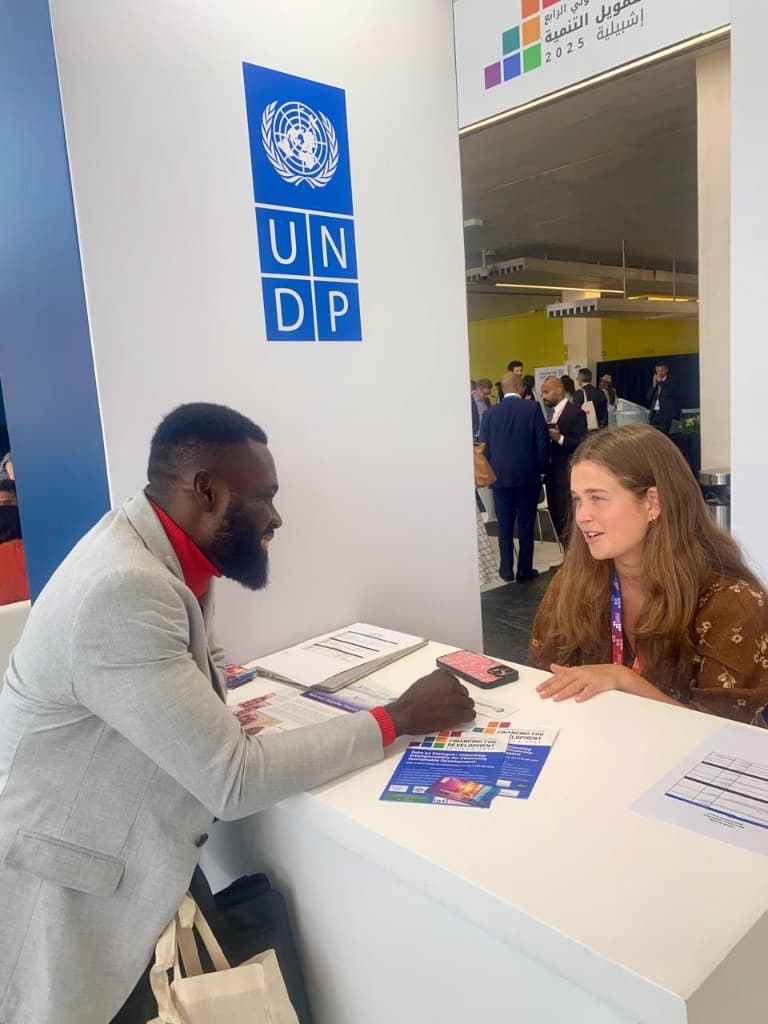
Strategic engagement on international blended finance and financing for development at the UNDP desk.
Commercial banks across Africa face stringent prudential requirements that make direct lending to early-stage SMEs virtually impossible at scale. Traditional venture capital, on the other hand, targets only the top 1% of software platforms. The vast missing middle — agribusinesses, light manufacturing, clean energy providers, and logistics operators — requires blended capital.
- 01SMEs with verified ESG (environmental and social governance) metrics access cheaper capital.
- 02Blended finance structures are the primary vehicle for unlocking mid-scale infrastructure and manufacturing in Africa.
- 03Institutional alignment with bodies like UNDP and UNEP creates immediate international co-financing pathways.
The Mechanics of Blended Finance
Blended finance uses catalytic capital from public or philanthropic sources (such as UNDP, bilateral donors, and development finance institutions) to de-risk investments and crowd in private commercial capital. By taking first-loss positions or subsidizing technical assistance, blended structures unlock funding that would otherwise remain dormant.
KIA–Start Up Consult collaborates with international development partners and private financiers to structure investable vehicles that direct funding to sustainable, job-creating enterprises.
“To fund Africa's real economy, we must construct the financial pipelines that allow development capital to de-risk private institutional investment.”
Have a question or looking to implement this strategy?
Our partners and sector specialists are available for direct discussion on WhatsApp. Every conversation is tailored to your business or institutional context.
The Missing Architecture: Why African Enterprise Needs Systems, Not Just Training
Africa does not lack entrepreneurial talent or vibrant ideas. It lacks the integrated economic architecture that connects skills to enterprise, enterprise to capital, and capital to sustainable productivity.
From Ideation to Investment Readiness: A Blueprint for Ghanaian Startups
Why 90% of pitch decks fail to secure capital, and the foundational disciplines Ghanaian founders must master before approaching institutional investors.