Women Entrepreneurship in Ghana 2026: Funding, Support Networks & How to Scale Your Business
A comprehensive guide for female founders in Ghana and across West Africa — covering how to access capital, navigate institutional support programs, build scalable enterprises, and leverage the Nuru Women Enterprise™ platform for accelerated growth.

Isaac Agya Koomson
Chief Executive Officer, KIA–Start Up Consult Ltd
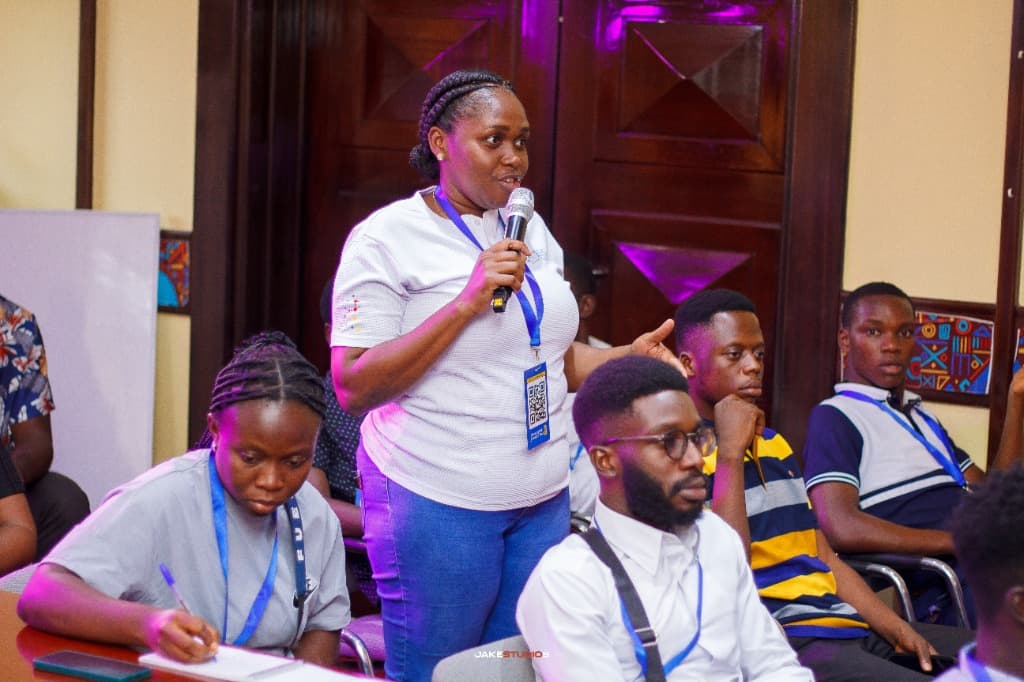
KIA–Start Up Consult workshop on women enterprise development and financial access — equipping female founders with strategic business tools.
Women constitute over 53% of Ghana's total population and drive the majority of informal economic activity — from market trading and food processing to beauty services and agribusiness. Yet female-owned enterprises account for less than 30% of formally registered businesses and receive under 8% of commercial bank SME lending in Ghana. The gap is not a lack of enterprise ability; it is a structural financing and formalization deficit compounded by systemic access barriers. In 2026, a convergence of domestic policy reform, international development finance, and platform innovation has created unprecedented opportunity for Ghanaian female founders to build scalable, institutionally-backed businesses. This guide shows you how.
1. The Real State of Women's Enterprise in Ghana: Challenges & Structural Barriers
Ghana ranks in the top quartile globally for female entrepreneurial activity (GEM Report 2025), yet this headline statistic masks a critical fragility: the overwhelming majority of female-owned businesses operate as subsistence micro-enterprises generating under GHS 5,000 monthly, without formal registration, accounting systems, or institutional relationships. When growth does occur, it is typically capital-constrained and structurally fragile.
The four core structural barriers are: (1) Collateral Deficit — traditional commercial banks require immovable property or physical assets as loan security; women disproportionately lack titled land due to customary land tenure systems that favour male inheritance. (2) Informality Trap — without formal registration, women's enterprises cannot access bank credit, government contracts, or development finance. (3) Financial Literacy Gap — limited exposure to formal accounting, investment structuring, and credit history building creates a persistent perceived 'risk premium' that banks use to justify exclusion. (4) Network Asymmetry — male-dominated professional networks, investor circles, and industry associations create structural disadvantages for female founders accessing capital, mentors, and contracts.
“The financing gap for women-owned businesses in Ghana is not a function of creditworthiness — it is a function of structural exclusion that deliberate systems can dismantle.”
2. Funding Opportunities Available to Female Founders in Ghana in 2026
Despite systemic barriers, 2026 represents the richest landscape for women's enterprise funding in Ghana's history. Female founders who understand the funding ecosystem can strategically access multiple capital layers simultaneously:
Government & Development Finance Instruments: The National Board for Small Scale Industries (NBSSI) operates the Mastercard Foundation-backed Women Entrepreneurs Finance Initiative (We-Fi), providing grants from GHS 5,000–GHS 50,000 for women-owned SMEs. NEIP (National Entrepreneurship and Innovation Programme) provides interest-free loans up to GHS 100,000 for businesses operating for minimum 6 months. The Exim Bank of Ghana and ADB (Agricultural Development Bank) offer women-specific agribusiness credit windows with reduced collateral requirements.
International Development Finance: The IFC's Women Entrepreneurs Opportunity Facility (WEOF) channels capital through partner commercial banks specifically for women-owned businesses in emerging markets. The African Development Bank's SheTrades initiative provides both funding and market linkage for female-owned export businesses. The US Government's DFC (Development Finance Corporation) deploys catalytic capital through West African impact funds targeting women founders.
Angel Networks & Equity Capital: The West Africa Venture Capital Association (WAVCA) connects female founders with regional angel networks. Impact investors such as Acumen Fund, Swedfund, and Norfund prioritize gender-lens investing across sub-Saharan Africa. Through HopeFusion Africa™, KIA–Start Up Consult connects investment-ready women-owned businesses with gender-lens investors offering patient equity from $50,000 to $2,000,000.
Grant Competitions: The Tony Elumelu Foundation (TEF) Entrepreneurship Programme provides $5,000 seed capital + 12 weeks mentorship annually to 1,000 African entrepreneurs with dedicated female representation. The Orange Corners Ghana program offers grants and business incubation. Cherie Blair Foundation for Women provides online mentorship and market access support.
3. How to Build a Fundable Women-Owned Business in Ghana
Accessing capital is not about gender-specific charity — it is about institutional readiness. Female founders who build fundable enterprises by following the same structural principles as male-led institutionally-backed businesses dramatically improve their capital access outcomes. The fundability checklist includes:
Legal Formalization: Register as a Private Company Limited by Shares under the Companies Act 2019 (Act 992) or register your Business Name with the ORC. A formal legal entity is the first gate to any institutional capital. KIA–Start Up Consult provides complete remote company formation for female founders.
Accounting Systems: Implement a basic cloud-based accounting system (QuickBooks, Wave, or Odoo Free) from day one. Monthly Profit & Loss statements, Balance Sheets, and Cash Flow statements — even in simplified form — demonstrate financial management capability and build the credit history narrative that financial institutions require.
Business Plan & Financial Model: A credible 3-year financial model projecting revenue, costs, and cash flows is essential for any loan or investment application. It signals strategic thinking and quantitative discipline — not just passion. KIA's Capital Advisory practice specializes in building investment-grade financial models for SMEs.
Collateral Alternatives: When traditional asset-backed collateral is unavailable, explore: Personal Guarantee structures backed by business cash flows, Inventory and Receivables Financing (asset-backed lending against confirmed purchase orders), Government Credit Guarantee Schemes (NBSSI guarantees up to 70% of bank loan exposure for qualifying SMEs), and Group Guarantee (cooperative lending circles where multiple businesses cross-guarantee each other's loans).
4. Nuru Women Enterprise™: KIA's Dedicated Platform for Female Founders
Nuru Women Enterprise™ is KIA–Start Up Consult's flagship program specifically engineered to address the structural barriers facing female entrepreneurs in Ghana and West Africa. The platform provides an integrated four-pillar support architecture:
Pillar 1 — Legal Formation & Compliance: End-to-end ORC registration, annual filing management, and GIPC advisory for internationally-structured women-owned businesses. Includes corporate governance setup and licensed Company Secretary services.
Pillar 2 — Financial Architecture & Capital Readiness: Accounting system setup, financial statement preparation, investment readiness audits, pitch deck development, and active matchmaking with gender-lens investors through HopeFusion Africa™.
Pillar 3 — Market Access & Export Readiness: Strategic advisory on domestic corporate value chain integration, export documentation for AfCFTA preferential trade corridors, and linkage with GhanaExport, GEPA (Ghana Export Promotion Authority), and international trade facilitation partners.
Pillar 4 — Leadership, Network & Mentorship: Access to KIA's curated network of female business leaders, executive peer learning circles, institutional partnerships with women's economic empowerment programs, and a 6-month structured mentorship pairing system.
The Nuru Women Enterprise™ platform has a target impact of supporting 4,000 women-led businesses, mobilizing USD $25M in gender-lens capital, and creating 9,000 jobs across Ghana and West Africa through 2030.
5. 5 Proven Strategies for Scaling a Women-Owned Business in Ghana
Strategy 1 — Corporate Value Chain Integration: Many large Ghanaian corporations (MTN, Unilever, Coca-Cola Ghana, Accra Brewery, PZ Cussons) run deliberate supplier diversification programs specifically seeking women-owned SME vendors. Winning a corporate supplier contract provides stable revenue, invoice financing eligibility, and a bankable revenue reference.
Strategy 2 — Export Through AfCFTA: The African Continental Free Trade Area removes tariffs on 90% of goods between signatory nations. Women-owned businesses in food processing, textiles (Kente, batik), beauty & cosmetics, and handicrafts have immediate export competitiveness into Nigeria, Côte d'Ivoire, Senegal, and the broader ECOWAS region with proper export documentation.
Strategy 3 — Digital & E-Commerce Platforms: Platforms like Jumia, Tonaton, and international marketplaces (Etsy for artisanal goods, Amazon Handmade) provide access to massive markets without the capital intensity of physical retail expansion. Digital storefronts dramatically lower market entry costs for growth-stage female founders.
Strategy 4 — Cooperative Structuring: Grouping into registered cooperatives (under the Companies Act or the Cooperative Societies Decree) enables pooled procurement, bulk purchasing discounts, group lending access, and collective bargaining power with institutional buyers.
Strategy 5 — Franchise Development for Service Sectors: Female-owned businesses in beauty, education, childcare, and food services can license their operational model as a franchise to replicate their business across multiple locations without full capital investment in each. Franchising requires formalized SOPs, trademark registration, and a licensing agreement — all areas where KIA provides institutional support.
“The most powerful thing a woman entrepreneur can do is stop thinking of her business as a livelihood — and start building it as an institution.”
6. How to Start Working with KIA–Start Up Consult Today
Whether you are a female founder at the ideation stage, a growing SME owner seeking to access institutional capital, or an established businesswoman ready to export and scale across Africa, KIA–Start Up Consult has a dedicated advisory pathway for you.
Through Nuru Women Enterprise™, our team works directly with female founders to assess business maturity, design a personalized formalization and growth roadmap, execute company registration and compliance, build an investment-ready data room, and connect with verified capital sources and market access partners. Start your conversation via WhatsApp — it is the fastest path to a free initial advisory session.
- Women's enterprise in Ghana faces structural financing barriers, not capability deficits — systems-level solutions outperform charity-based interventions.
- Formal registration under Act 992 is the first non-negotiable step to accessing any institutional capital or government support program.
- 2026 offers the most diverse women's enterprise funding landscape in Ghana's history — from government grants to AfDB gender-lens equity.
- Nuru Women Enterprise™ provides an integrated four-pillar support architecture from legal formation to investor matchmaking.
- Corporate value chain integration, AfCFTA export, and digital scaling are the three highest-leverage growth pathways for established female founders.
People Also Ask
Q1.What funding is available for women entrepreneurs in Ghana in 2026?
Multiple funding sources are accessible in 2026: Government schemes (NBSSI We-Fi grants of GHS 5,000–50,000, NEIP interest-free loans up to GHS 100,000), Development Finance (IFC WEOF, AfDB SheTrades, US DFC), grant competitions (Tony Elumelu Foundation $5,000 + mentorship), and equity capital through gender-lens impact investors via HopeFusion Africa™ for investment-ready businesses. KIA–Start Up Consult helps female founders navigate and apply across multiple channels simultaneously.
Q2.How can a woman register a business in Ghana?
Female founders can register a Private Company Limited by Shares or a Business Name with the Office of the Registrar of Companies (ORC) at www.orc.gov.gh. Required documents include valid national ID (Ghana Card or passport), proof of address, proposed company name, and for a Limited Company — professionally drafted Company Regulations. KIA–Start Up Consult provides full remote registration support.
Q3.What is the Nuru Women Enterprise™ program?
Nuru Women Enterprise™ is KIA–Start Up Consult's dedicated women enterprise development platform. It provides four integrated services: legal formation and compliance management, financial architecture and capital readiness, market access and export facilitation, and leadership mentorship and network access. Its target is to support 4,000 women-led businesses and mobilize USD $25M in gender-lens capital by 2030.
Q4.Can a Ghanaian woman get a business loan without collateral?
Yes, through several mechanisms: NBSSI Credit Guarantee Schemes cover up to 70% of SME loan risk, removing full collateral requirements. Group/cooperative guarantee lending allows members to cross-guarantee. Invoice and purchase order financing uses confirmed orders as collateral. NEIP provides interest-free startup loans without traditional asset collateral. These options work best for formally registered businesses with basic accounting records.
Q5.How can a woman entrepreneur in Ghana export her products to other African countries?
Under the AfCFTA framework, Ghanaian businesses can export to 54 African nations with reduced or zero tariffs on qualifying goods. The process involves obtaining an Export Certificate from GEPA (Ghana Export Promotion Authority), a Certificate of Origin (from GCCI or sector associations), product quality certifications (GSA or sector-specific), and destination market import clearance documentation. KIA's SME Growth & AfCFTA advisory helps female founders navigate this process end-to-end.
Q6.What sectors are most successful for women entrepreneurs in Ghana?
Female entrepreneurs in Ghana demonstrate strongest business performance in: Agribusiness and food processing (market women, smallholder farming, value-added food production), Fashion and textiles (Kente weaving, batik, fashion design and export), Beauty and personal care (salons, skincare manufacturing, cosmetics), Education and childcare (private nurseries, tutoring centers, skills training), and Healthcare and wellness (pharmacies, nutrition consulting, maternal health services). Each sector has distinct formalization, funding, and scaling pathways.
Have a question or looking to implement this strategy?
Our partners and sector specialists are available for direct discussion on WhatsApp. Every conversation is tailored to your business or institutional context.
The Complete Guide to Formalizing an Informal Enterprise in Ghana
A comprehensive, step-by-step masterclass on transforming an unregistered hustle or sole proprietorship into a protected, bankable, and scalable limited company.
How Ghanaian Startups Can Prepare for Institutional Funding in 2026
A pragmatic blueprint for founders navigating venture capital, development finance institutions (DFIs), and blended finance syndicates across Ghana and West Africa.
How to Register a Company in Ghana in 2026: The Complete ORC Step-by-Step Guide
A definitive, plain-English walkthrough of company registration in Ghana under the Companies Act 2019 (Act 992) — covering every document, fee, timeline, and compliance obligation you need to get your business legally operational.